Some days remind you why you chose this profession
Gabriel Morostes is a Registered Nurse and Quality Improvement Lead at Priory, with a strong passion for quality improvement, patient safety, quality of care, and staff experience. He is also Co-founder and Managing Partner of UK Diaspora for Health, an initiative that empowers diaspora health professionals to drive meaningful change both within the UK and across global health systems.
As a current FNF Scholar, on World Patient Safety Day, Gabriel’s reflection explores his experience as an international nurse, the impact the scholarship has had on his confidence and leadership approach, and the work currently being developed in Romania around staff safety, de-escalation, and violence reduction within mental health services.
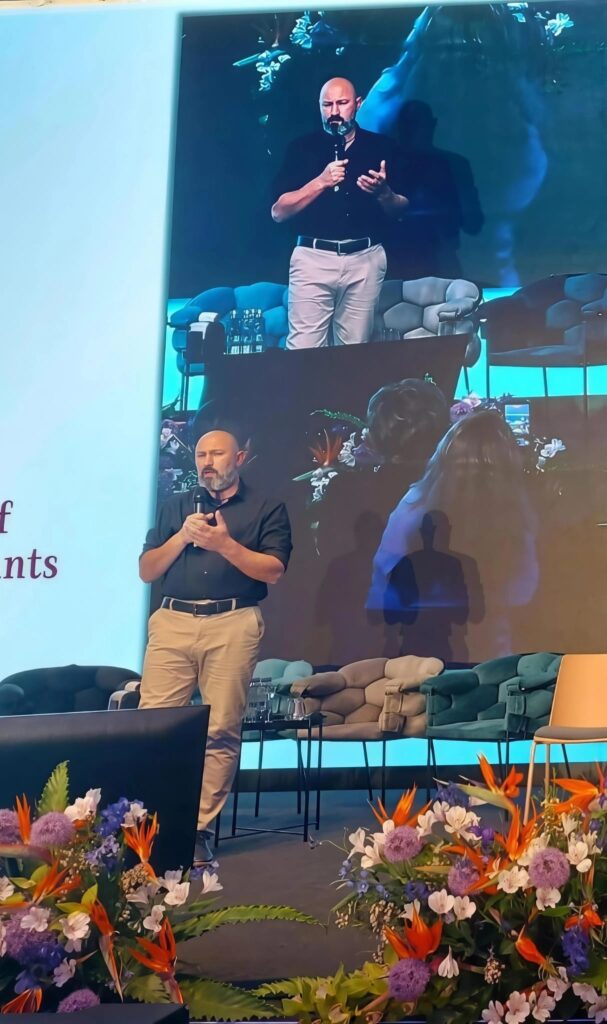
“In May 2026, in Bucharest, it was one of those moments. I had the honour of speaking at two of Romania’s most important mental health and nursing conferences – one hosted by The Order of General Nurses, Midwives, and Nurses of Romania, Bucharest Branch, and the second by Prof. Dr Alexandru Obregia Psychiatry Hospital, within the Palace of the Parliament.
Standing there, I reflected on how unexpected this journey has been. A few years ago, I probably would never have imagined myself standing in front of hundreds of professionals with that kind of confidence.
As an international nurse from Romania, with English not my first language, I struggled with confidence for a long time, overthinking before speaking in meetings, sometimes staying quiet even when I had ideas to contribute, not because I did not care, but because self-doubt can be very loud. That is one of the reasons why applying for the Florence Nightingale Foundation scholarship programme felt so intimidating, I questioned whether I belonged there, whether I was experienced enough, and whether my voice would matter.
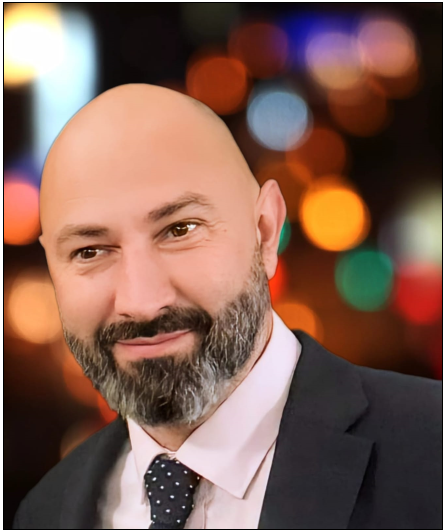
"Looking back now, it was one of the best decisions I have ever made. It did not simply teach me leadership theories or frameworks; it changed how I see myself as a leader and how I approach people, systems and change."
Gabriel Morostes, Registered Nurse and Quality Improvement Lead at Priory
One question stayed with me from the beginning: “What kind of leader do you want to be?” At first, I thought the answer was simple – supportive, compassionate, someone who makes a difference. But over time, I realised leadership is not defined by job titles or hierarchy, but by influence – creating environments where people feel safe, heard, valued, and supported. It is about what you leave behind after you move on.
Before the programme, my leadership style was practical and task-focused, if there was a problem, I fixed it quickly and moved on. But the programme challenged me to slow down and ask instead: “Why is this happening?” “What are we missing?” “What are people not saying out loud?” That shift changed how I approach my work at Priory, and it transformed the work I was already doing in Romania.
Alongside the programme, I had been supporting a mental health hospital in Bucharest developing a new CAMHS service. One issue kept coming up in discussions with the Director of Clinical Services, Corina Gagiu: staff were experiencing high levels of violence and aggression, and for many, this had sadly become normalised, which reinforced something I strongly believe: patient safety starts with staff safety.
The old version of me would probably have gone straight into delivering training. But the biggest lesson from the programme was the importance of listening first. So we conducted an anonymous survey; more than 250 staff responded. Most had never received formal de-escalation or restraint training, incidents were happening daily, and more than 95% of staff reported experiencing physical abuse at least once. It became clear this was not simply a training issue, it was cultural and systemic.
Together, we developed a conflict and violence management programme adapted to Romanian mental health services, culture, and legislation, built around a Train-the-Trainer model so the knowledge would remain within the organisation. For the first time, Romania now has a programme designed specifically around its own context, work that also responds to concerns previously raised by the European Committee for the Prevention of Torture.
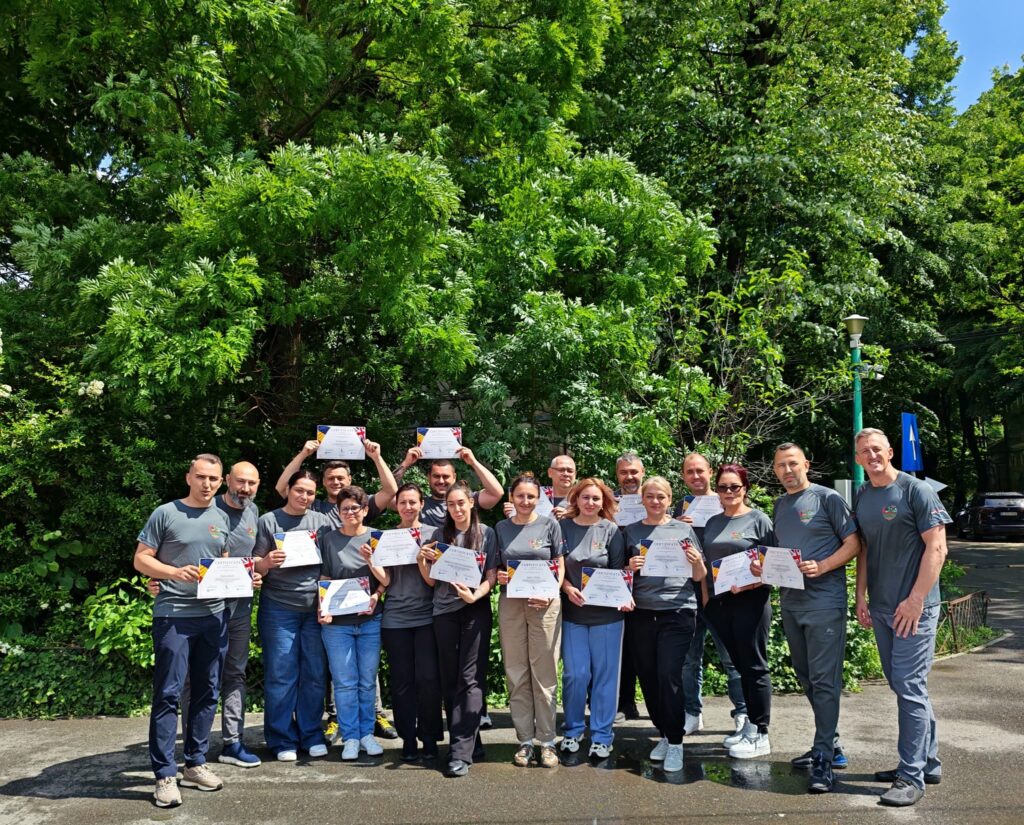
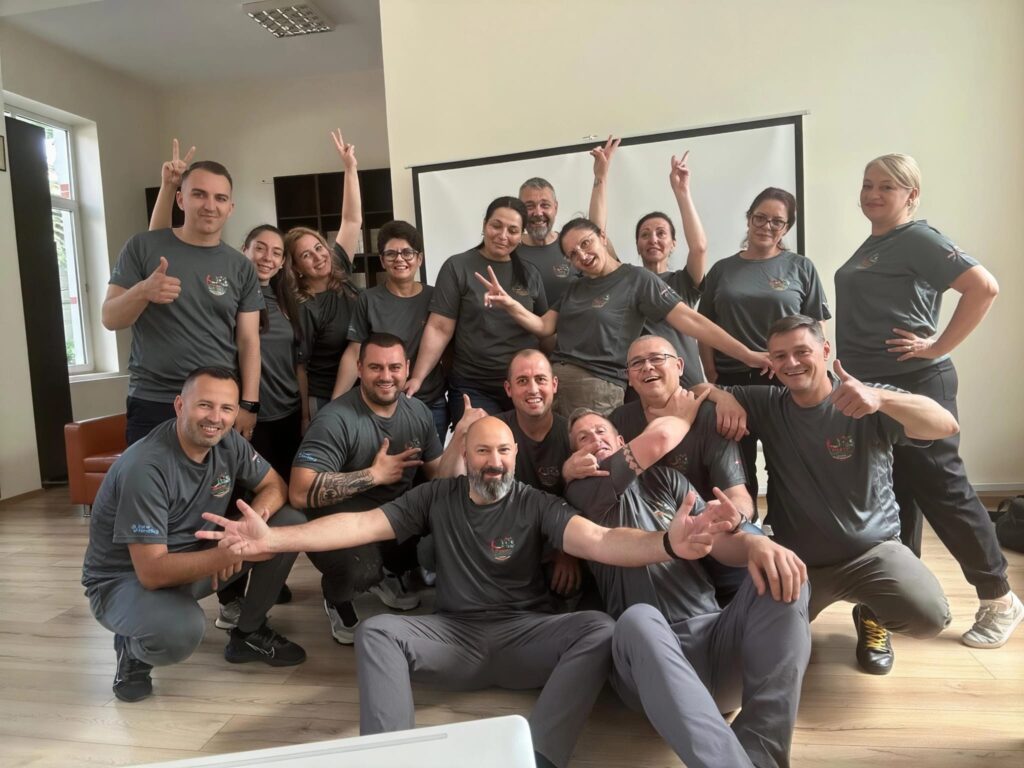
One of the most important lessons I took from the programme was that leadership is also about recognising opportunities and having the courage to act on them. That confidence gave me the push to reach out to Doug Melia and Safer Handling International, whose support and expertise became instrumental in delivering the first programme of this kind in Romania.
Looking back, the work was never just about training, it was about helping people feel heard, staff feel safer, and teams believe improvement is possible. Working between the UK and Romania also challenged many of my own assumptions: what works in one healthcare system cannot simply be copied into another.
But this journey was not always positive or straightforward. During the programme, I applied for a role I genuinely believed I was ready for, and I did not get it. That rejection affected me more than I expected, as an international nurse, those moments hit especially hard, because part of you wonders whether you truly belong. It took me time to realise that not getting that role did not mean I had failed; it simply meant I was not there yet, and that experience probably taught me as much as the successes did.
“Leadership is not about moving upwards without setbacks. Confidence is not something you achieve once and keep forever, it needs rebuilding at different stages of the journey, and I need to keep learning, keep challenging myself, and keep stepping into uncomfortable spaces.”
None of this would have been possible without the support of Priory, where so much of what I have learned about leadership, quality, safety, and compassionate care has been shaped. That support extended beyond my own development, colleagues from Romania were also given the opportunity to visit services in the UK and see first-hand how care for young people is delivered. For me, that is what meaningful leadership support looks like: not simply investing in one individual, but creating opportunities for shared improvement.
When I stood in Bucharest speaking in front of so many nurses and mental health professionals, I realised the journey had come full circle. Years ago, I was the person sitting quietly in meetings, worried that my voice would not be good enough. Now I was speaking about leadership and the future of mental healthcare, not because I suddenly became fearless, but because I learned that leadership is not about never doubting yourself. Sometimes leadership is speaking anyway.
And when I think back to that original question – “What kind of leader do you want to be?” my answer feels much clearer. I want to be the kind of leader who creates safe environments where both staff and patients feel supported; who listens before acting, builds others up, and understands that real change takes time. Most importantly, I want to never forget what it feels like to feel uncertain, because that is often where growth begins.
Because in the end, leadership is not measured by titles or status. It is measured by the difference you make and the people you help along the way.