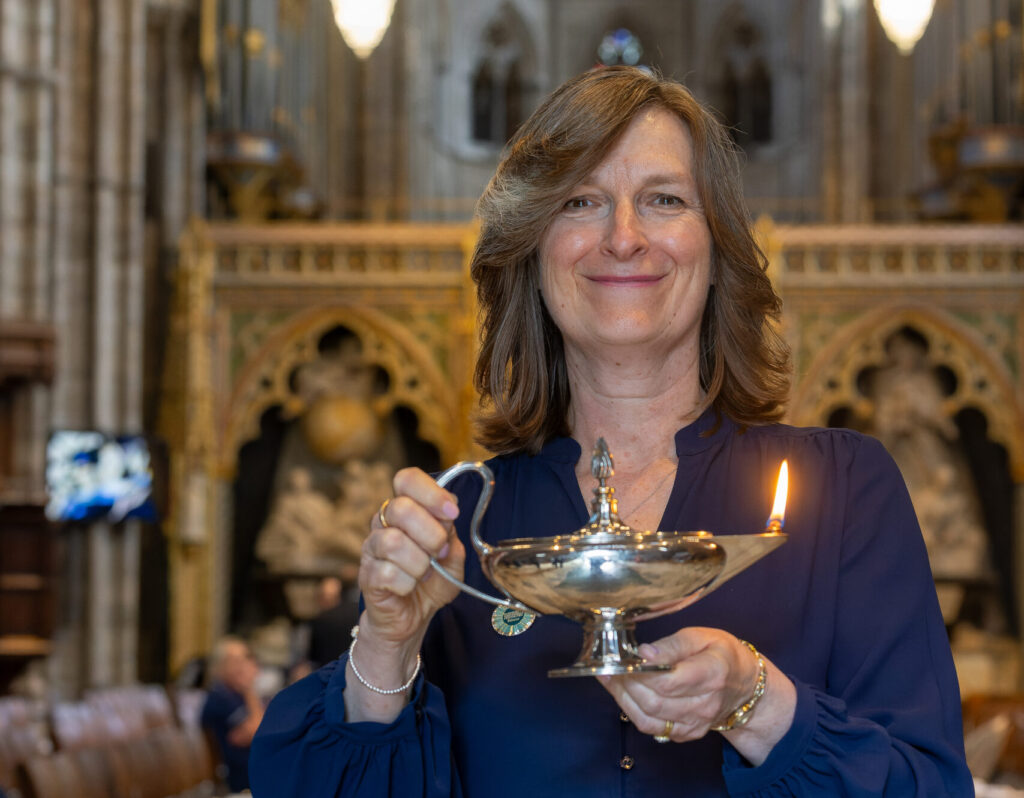
Debbie Cubitt is a Senior Clinical Manager at NHS England, East of England (EOE), and the Regional Preceptorship Lead. She has played a central role in the successful regional implementation of the National Preceptorship Interim Quality Mark (IQM), working with national NHS England retention leads and regional preceptorship leads to embed consistent, high‑quality preceptorship to support preceptees to transition smoothly and effectively into employment.
Debbie has also led the development of a regional pre‑preceptorship initiative, informed by findings from the Florence Nightingale Foundation Preceptorship Pulse Check (FNF, 2025), aimed at supporting learners during their pre‑registration programmes.
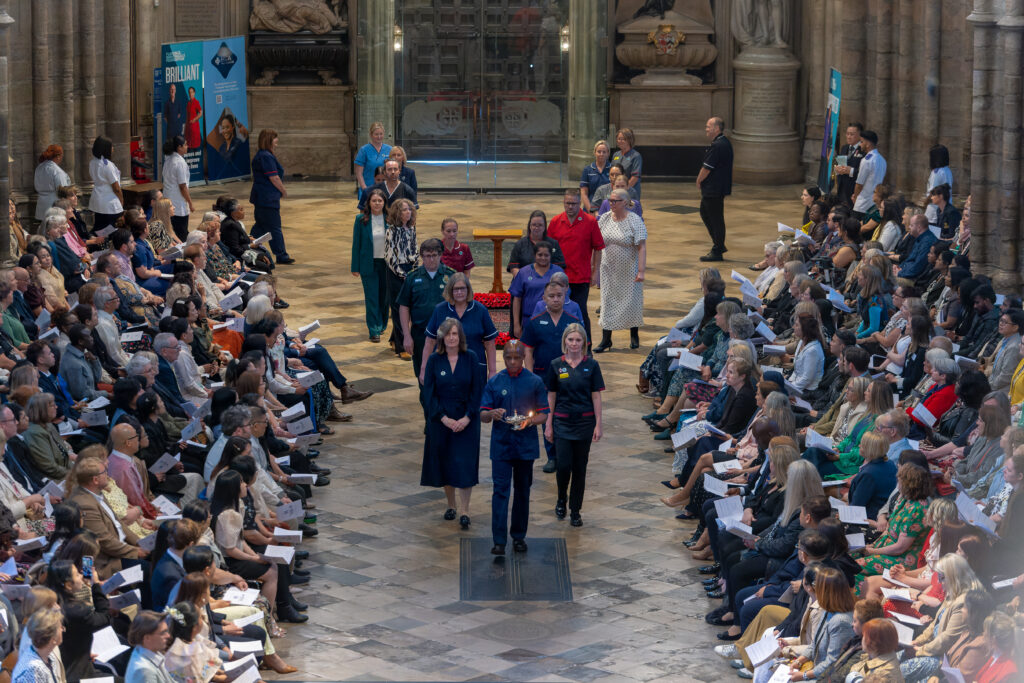
As one of the two Lamp Escorts at the Florence Nightingale Commemoration Service in May 2026, and now as our latest Star Alumni, here Debbie shares the impact the scholarship has had.
Transforming Early Career Transitions: My Florence Nightingale Foundation Scholarship Journey
Undertaking my Florence Nightingale Foundation (FNF) Scholarship has been one of the most transformative experiences of my professional career. At the outset, my aims were to strengthen my leadership skills, build confidence and expand my professional networks. I wanted to challenge myself, step beyond my comfort zone and engage more meaningfully with senior leaders across and beyond the NHS. Ultimately, this journey was about personal and professional growth, enabling me to better support colleagues and contribute to improved patient care

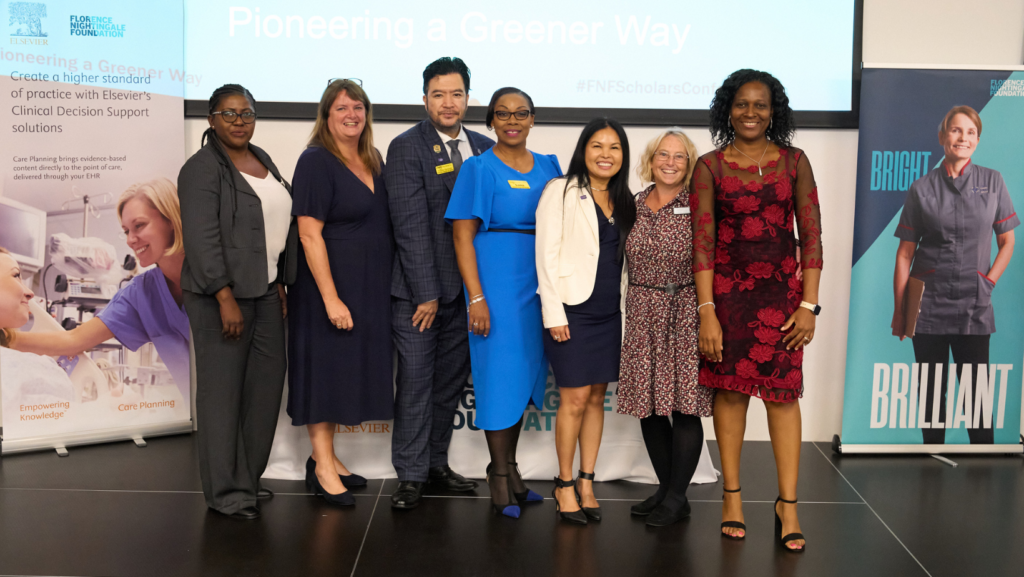
"I was privileged to work alongside inspirational FNF colleagues to support the development of the Preceptorship Plus programme, enabling me to gain valuable insight into digital learning design and collaborative programme development."
Debbie Cubitt – NHS Eng;amd
Pre-Preceptorship Co-Design:
Building Foundations for Future Health Professionals
A central component of my scholarship was my quality improvement project, Pre-Preceptorship Co-Design: Building Foundations for Future Health Professionals. This work built on my longstanding commitment to preceptorship, which plays a vital role in supporting newly registered professionals to transition into practice with confidence, competence and resilience.
Across the East of England, significant progress had already been made, with 84% of organisations achieving the Interim Quality Mark for preceptorship by March 2024. Leading this regional work between 2021 and 2024 was a pivotal moment in my career. It was my first experience of leading a regional programme and provided invaluable insight into my leadership style and the importance of collaboration. I developed strong relationships with preceptorship leads across the region and strengthened the East of England Preceptorship Network, creating a platform for shared learning, peer support and innovation.
As this work concluded and planning began for the National Multi-professional Preceptorship Programme, there was a clear opportunity to build on this momentum and focus on supporting learners earlier in their professional journey. This inspired the development of pre-preceptorship as the focus of my Florence Nightingale Foundation scholarship project, exploring how learners can be better supported earlier in their transition journey.
In November 2024, I led a cross-organisational multi-professional team to deliver a pre-preceptorship co-design event involving colleagues from NHS England, integrated care boards, provider organisations, universities and the wider health and social care system. Together, we defined pre-preceptorship as a supportive structure that nurtures health professionals from the beginning of their educational programme, through qualification and transition into employment and preceptorship.
The event created an opportunity for professionals and learners to work together to design resources that would better prepare students for transition into practice. One workshop focused on navigating the path to employment and resulted in practical resources to support job applications, interview preparation and career readiness. Another explored the role of Professional Nurse Advocates, Professional Midwifery Advocates and Professional AHP Advocates in supporting preceptee wellbeing, confidence and career development. This work has influenced ongoing regional initiatives to strengthen supportive career conversations and professional advocacy within the preceptee experience, with continued collaboration across the region to further develop and embed this approach. Additionally, one organisation has commenced a project to introduce structured career conversations from year one of a community pre-registration pathway, supporting learners to consider their career development and future progression from the outset of their studies.
Alongside the co-design event, we explored how we could take forward recommendations from the Florence Nightingale Foundation Preceptorship Pulse Survey to integrate awareness of preceptorship throughout university curricula. Working collaboratively with a colleague from a regional university and three NHS trusts, we co-designed an innovative programme, Transforming Early Career Transitions Through Interprofessional Partnership. Presented at the Eastern Partnership for Innovations in Integrated Care Conference (EPICC) earlier this year, the programme is based on the principle that supporting learners to transition successfully into practice is everyone’s responsibility.
Together, we developed a partnership-led pre-preceptorship model that introduces students to the principles and benefits of preceptorship much earlier in their educational journey. The programme enables learners to connect with preceptorship leads and learn with, from and about other professions, helping to build confidence, professional identity and readiness for collaborative practice before qualification.
My scholarship also created opportunities to contribute to national work programmes. I was privileged to work alongside inspirational FNF colleagues to support the development of the Preceptorship Plus programme, enabling me to gain valuable insight into digital learning design and collaborative programme development. Contributing to the Preceptorship Pulse Survey, helped connect regional and national colleagues to strengthen the overall outcome impact of the survey. These experiences broadened my strategic perspective, enhanced my understanding of national workforce priorities and enabled me to build valuable networks beyond my region.
Beyond the projects themselves, the scholarship has been a deeply personal leadership journey. Additional scholarship opportunities through CHIME CXO and the Windsor Leadership Programme challenged me to explore my leadership identity and values in new environments, alongside leaders from sectors including healthcare, education and the armed forces. These experiences provided fresh perspectives on leadership, influence, courage and curiosity.
One of the most significant lessons has been learning to embracing my strengths with greater confidence and accept that effective leadership does not require having all the answers.
Being an FNF Scholar has provided a platform for reflection, development and empowerment. It has strengthened my voice, expanded my network and increased my confidence to lead with purpose. As I look to the future, I do so with curiosity, courage and conviction, ready to continue learning, growing and making a difference.
If you are looking to develop your leadership skills, build confidence or explore new opportunities, an FNF Scholarship can be truly transformational. The experiences, support and networks gained are invaluable, and it is a privilege to be part of the Florence Nightingale Foundation alumni community. I would highly encourage you to apply.