Lessons from Kenya Inspiring Change in Malawi
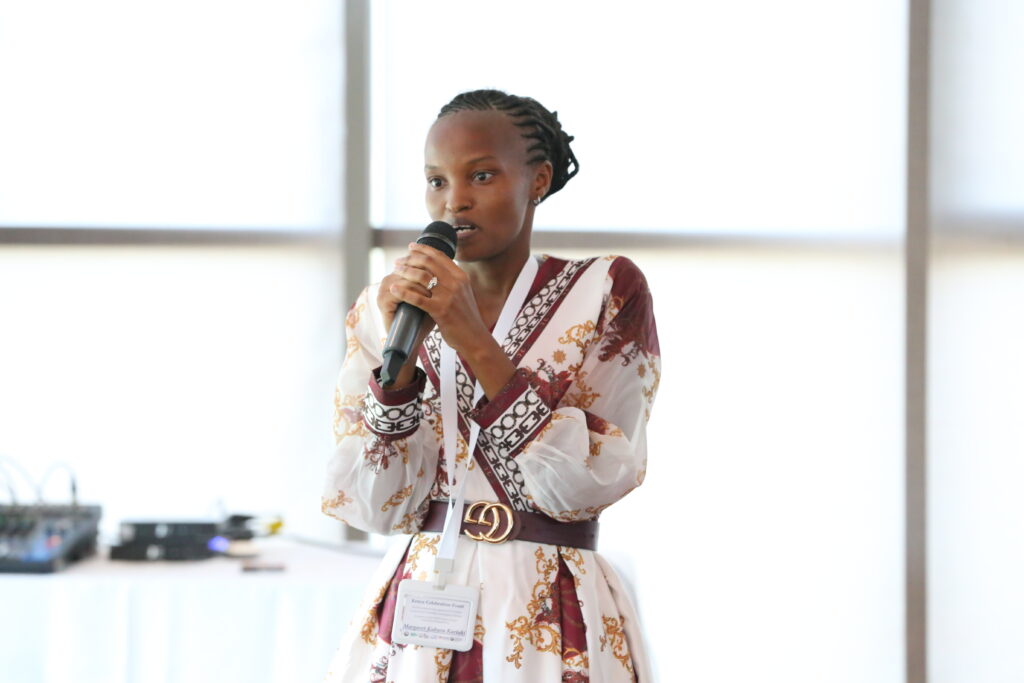
You may remember Star Alumni Margaret Kariuki, a graduate of our leadership development programme in Kenya. Almost a year after completing the programme, Margaret recently joined nurses and midwives from across Malawi for a live webinar – sharing the results on her work and her community.
Margaret is a labour and delivery charge nurse at Hola Hospital in Tana River County, north-east Kenya. She lives and works in a rural, hard-to-reach area, an eight-hour drive from the capital, serving mainly marginalised pastoralist communities.
As part of her leadership programme, Margaret designed a QI project focused on increasing participation in Continuous Medical Education (CME). While CME is essential for safe, high-quality patient care, participation where she works had been inconsistent due to barriers such as time pressures, funding and competing priorities.
Margaret’s aims were to remove barriers, build buy-in, and create a sustainable culture of continuous learning.
As Malawian programme participants were at the final stage of submitting their quality improvement (QI) proposals – a core part of their leadership programme, Margaret’s story offered learning and inspiration: proof that locally led change, even in remote settings, can transform care.
Clear impacts, one year on
One year later, the results speak for themselves.
A CME committee has been set up, and CME sessions are now held weekly, using a blended model of face-to-face and online learning. Topics have ranged widely: mental health, haemophilia, oncology, maternal and reproductive health, and newborn care, responding directly to local needs.
These sessions have translated into measurable improvements across the hospital:
- Haemophilia care
Identified cases have increased from 14 to 23, driven by improved awareness and inter-departmental referrals. The growing demand has justified the purchase of a new diagnostic machine, strengthening long-term service delivery.
- Oncology services
Clinical breast examinations and cervical cancer screenings rose dramatically, from 13 of each in August to 84 in October, showing how education can rapidly change practice.
- Newborn outcomes
Neonatal deaths linked to birth asphyxia and prematurity had been rising steadily between 2022 and 2024. In 2025, following 20 CME sessions on maternal, reproductive and newborn care, deaths more than halved.
One of Margaret’s colleagues shared:
“The knowledge about caffeine citrate and CPAP machines has transformed the clinical landscape of our babies in the NBU, especially preterm babies. Survivability has improved significantly for neonates receiving caffeine citrate as part of their treatment plan.”
The impact goes beyond numbers. A new newborn unit has now been established, reducing referrals of preterm babies to neighbouring hospitals from five in 2024 to just one in 2025. For families, this has been life-changing – the nearest referral hospital is over three hours away.
CME is now embedded into everyday practice at Hola Hospital.
“Acceptance was initially a big challenge,” Margaret shared, “but now CME is part of the system.”
Technology has also enabled wider reach, with plans to invest in better equipment to further improve quality and access.
And learning showed that sometimes it’s small changes that can make a difference: feedback showed that sourcing funding for refreshments at the sessions played a part in increased participation!
Sharing success across borders
Margaret’s webinar with Malawian participants highlighted the power of cross-country learning: while contexts might be different, leadership challenges, and solutions, are often shared.
Margaret closed the webinar by offering three key success factors for Malawian participants shaping their own QI projects:
- Strong leadership drives success
- Early stakeholder involvement builds sustainability
- Continuous feedback drives improvement
What’s next
Margaret is now stepping into a new leadership role, overseeing Infection Prevention and Control, while continuing to strengthen CME delivery. The next areas of focus for training include paediatrics and emergency care, following the opening of a new emergency department at Hola Hospital. She is also looking into accreditation for the CME and is hoping to publish her learnings. And last but not least she was awarded ‘Best Employee of the Year 2025 in Health Care’ in the county!
Meanwhile, Malawian leadership programme participants are already applying this learning to their own QI proposals. The top ten projects will be presented at the end-of-programme event in January, watch this space for feedback.