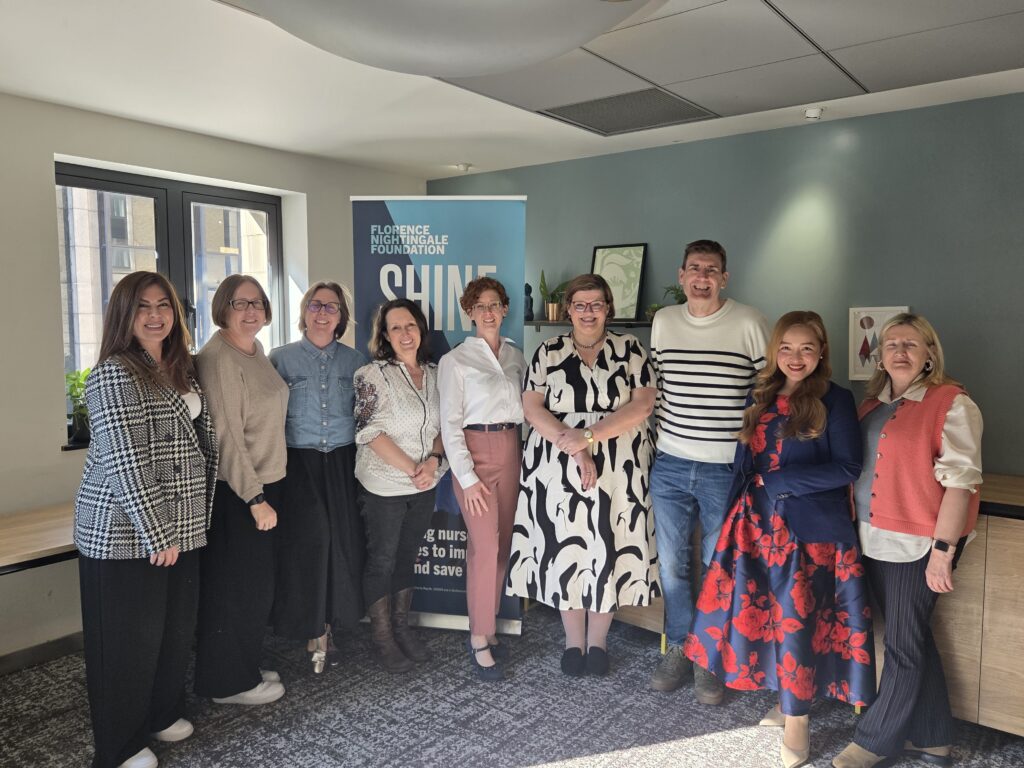
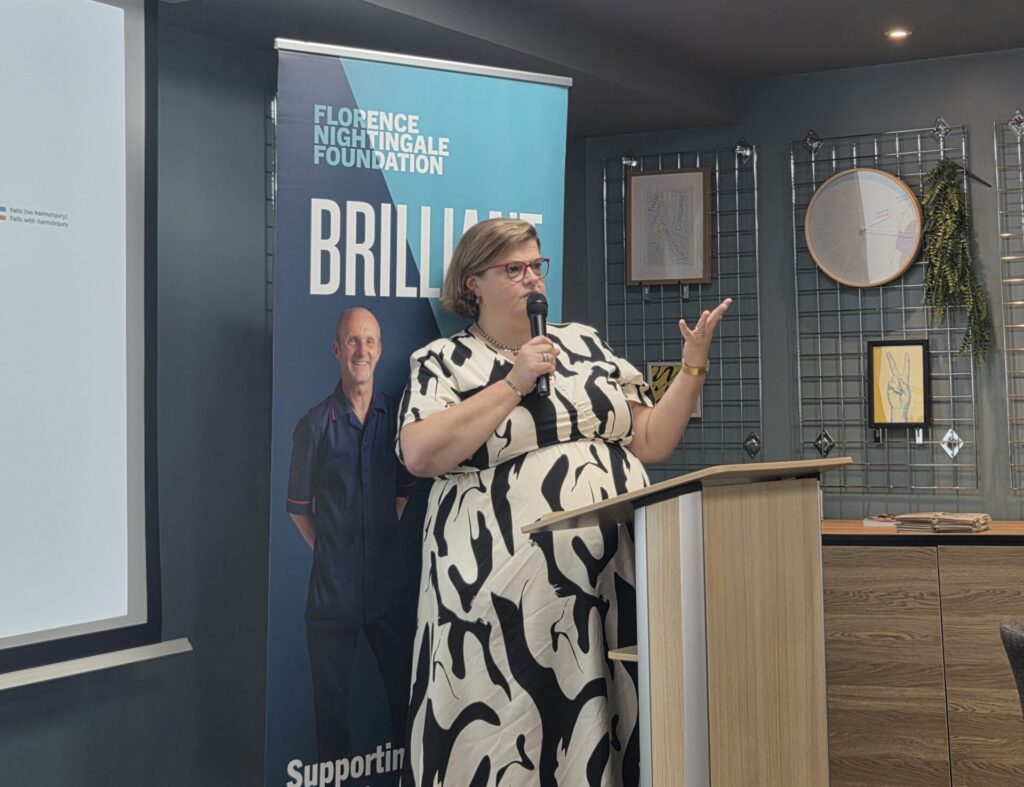
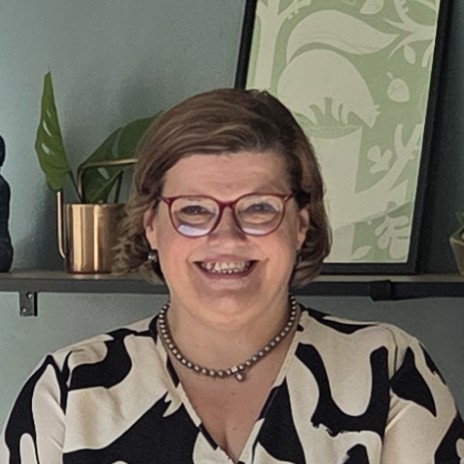
Michalae Thompson is a Group Quality & Governance Manager and Senior Nurse at Forest Healthcare. Michalae recently completed the Established Leaders programme with FNF and as a Star Alumni she shares her experience and the impact the programme had.
Thirty Years in Nursing Taught Me a Lot. The FNF Programme Taught Me I Belonged
Why I applied
I qualified as a nurse in 1994 and have spent most of my career in social care, working as a home manager, a regional operations lead and in a national dementia nursing role before moving into my current position as Group Quality and Governance Manager, the senior nurse for Forest Healthcare, a group of fourteen care homes across London and the South East. I’d seen colleagues at other organisations access Florence Nightingale Foundation programmes and watched first-hand the difference it made to them. So when the question was asked – who do you think would benefit from this? – my hand went up before the sentence had finished. I’m many things, but subtle isn’t one of them. And honestly, I’m glad about that.
I was lucky to have the support of the senior leaders at Forest Healthcare from day one, and what made it even better was that they were more excited about me doing this programme than I was. That meant everything. It felt like exactly the right moment in my career to grow from being a clinical leader into a more influential one. Throughout my career I’ve had the privilege of working alongside some truly inspiring nurse leaders who shaped the way I think and lead, and I want to be that for the nurses in our organisation. To pay it forward. I applied, and I’m so glad I did.
“Validating, empowering, inspiring – and long overdue for social care nursing.”
Michalae Thompson – Group Quality & Governance Manager | Senior Nurse, Forest Healthcare
What the programme gave me
The programme gave me things I hadn’t expected. I knew it would sharpen my thinking, but what I didn’t know was how much it would quiet the voice of self-doubt that I think most nurses carry at some point. I’d spent years wondering whether I truly deserved the position I’d worked so hard for. Impostor syndrome is almost a rite of passage in nursing. What the programme gave me, more than anything else, was the confidence to stop questioning whether I deserved to be here. I do. And that’s changed how I lead.
My real “aha” moment came during the RADA session on landing your message. It really resonated: the way we deliver a message is just as important as the message itself. Social care nurses are skilled communicators and advocates. We have complex conversations with residents, families and professionals every single day, and unlike many of our NHS colleagues, we have the privilege of time. We build meaningful, lasting relationships with our residents and their families, often over months and years. We know them. We advocate for them in a way that’s deeply personal.
But this session made me look at something I hadn’t examined in myself before: that I don’t always need to match the emotion of the situation. Passionate advocacy is my default and it comes from a genuine place, but I learned that quiet, thoughtful, well-placed messaging can be far more effective. That’s been one of the most useful things I’ve learned about myself as a leader. It’s changed how I take social care nursing’s stories into the rooms where decisions are made.
“Social care nursing is an amazing field. We have nurses who balance person-centred care with the reality that a care home is someone’s home, who put residents’ choices first and walk alongside people through the longest chapters of their lives. You get to really know people. You make a difference you can see.”
My quality improvement project
For my QI project, I tackled our approach to falls governance. Our previous system produced retrospective reports, which meant that getting to the bottom of trends, patterns and risks required further investigation and additional time before we could provide meaningful assurance. That lag frustrated me. I led the implementation of RADAR, a live clinical governance platform, across all fourteen homes. The difference was immediate – repeat fallers, peak time and location patterns, and harm trends became visible in real time, and we could create a proper evidence loop from incident through to care plan change, action and Board assurance. Data became a leadership tool, not just a reporting obligation.
Graduation day
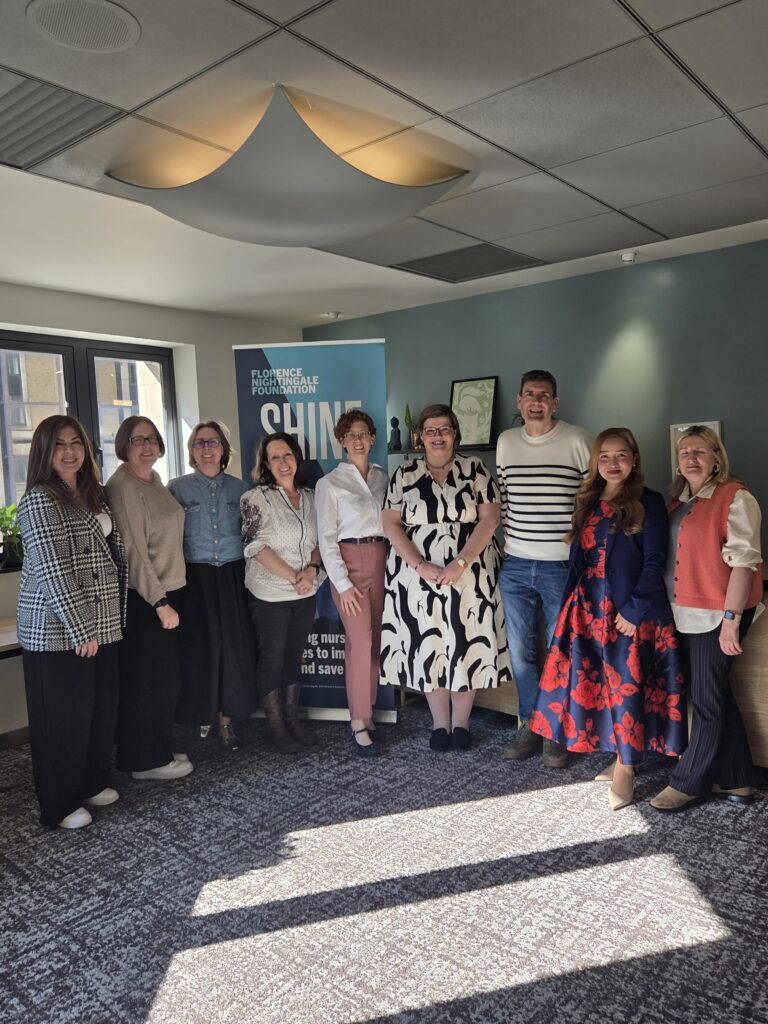
It was wonderful to finally see everyone in person after spending so much of the programme virtually. The Celebration Day brought together nurses from both the Emerging and Established Leaders programmes, and seeing the range of experience in that room and what everyone had achieved was genuinely exciting. I was sad that not everyone from my cohort could make it, but the energy on the day was something else. When I presented my project, the questions were thoughtful and curious – people genuinely wanted to understand the work, to dig into it, and to share ideas. There were no egos and no sense that one person’s role or setting mattered more than another’s. It was a warm, open space and a real moment of celebration. I was the social care nurse in that room. And I belonged there.
“No egos, no hierarchy – just nurses who cared deeply and asked questions that mattered.”
My message to you
If you’re a nurse in social care and you’re wondering whether a programme like this is for you, whether it’s aimed at people like you, whether your experience is “enough”, I want to be clear: it is. You belong there. The Florence Nightingale Foundation doesn’t just develop leaders. It reminds you of all the reasons you became a nurse and helps you see, without any doubt, that you have something to bring. Don’t hesitate. Apply.