What a Rural Community in Nepal Taught Me About Health Inequality
Dani Nebres, Lead Nurse, King’s NIHR Clinical Research Facility, and current FNF Leadership Scholar
As a Lead Nurse at King’s NIHR Clinical Research Facility (CRF) and a current Florence Nightingale Foundation (FNF) Leadership Scholar, I have long been committed to advancing equity, diversity and inclusion (EDI) in healthcare and in research. Through the support of the FNF scholarship, I travelled to Nepal to explore health inequalities in a low-resource setting and to reflect on what global learning can teach us about delivering more equitable care in the United Kingdom.
For World Health Day, I find myself reflecting not on systems or structures alone, but on people — and on how inequality is experienced in daily life.
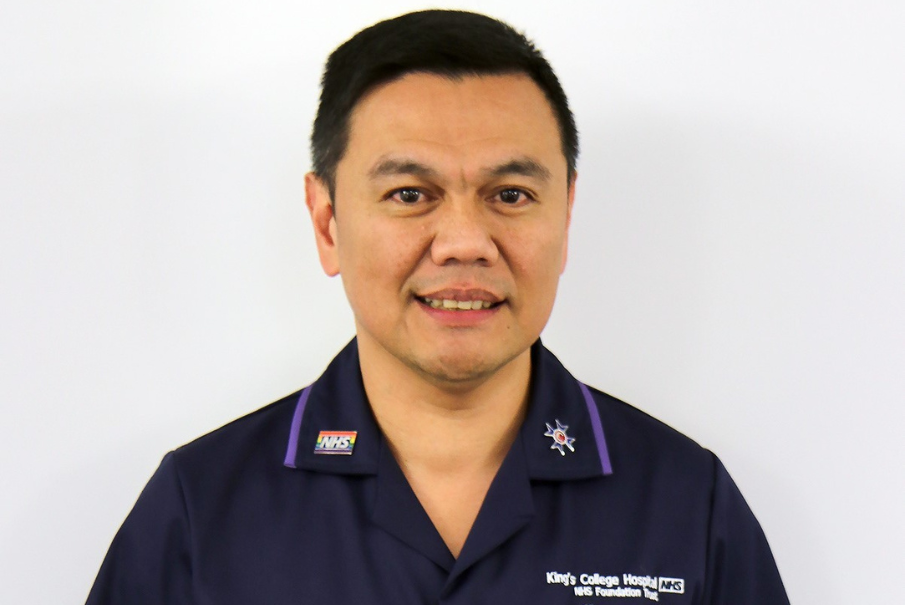
I began my visit in a tertiary teaching hospital in Kathmandu, speaking with senior nurses and medical leaders to understand how care is delivered across the country. But it was my immersion in the rural community of Pari Gaon that brought the reality of health inequality into sharp focus.
Here, inequality is not abstract. It is geographical.
Access to healthcare is shaped by mountains, weather and infrastructure. Some patients walk for hours along steep, uneven paths to reach a health post. For pregnant women, elderly residents, or those with chronic illness, that journey is not simply inconvenient — it can be dangerous. Time and terrain become barriers to survival.
On World Health Day, we often talk about “health for all.” In Pari Gaon, I saw how far some communities still are from that goal. Services may exist, but reaching them requires resilience, physical strength and often financial sacrifice. Travel costs, lost time in the farm – their bread and butter and limited health literacy all compound the challenge.
And yet, what struck me most was not despair — it was determination.
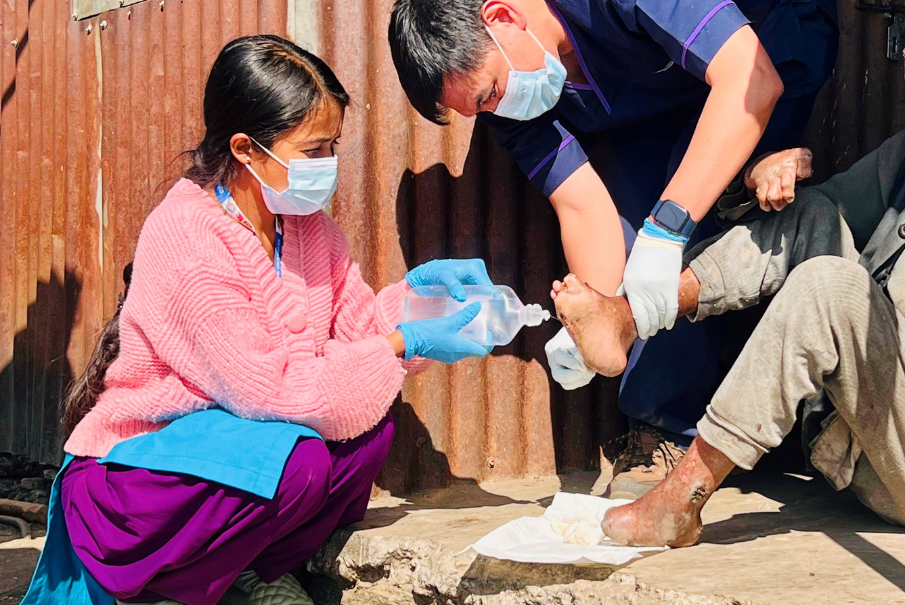
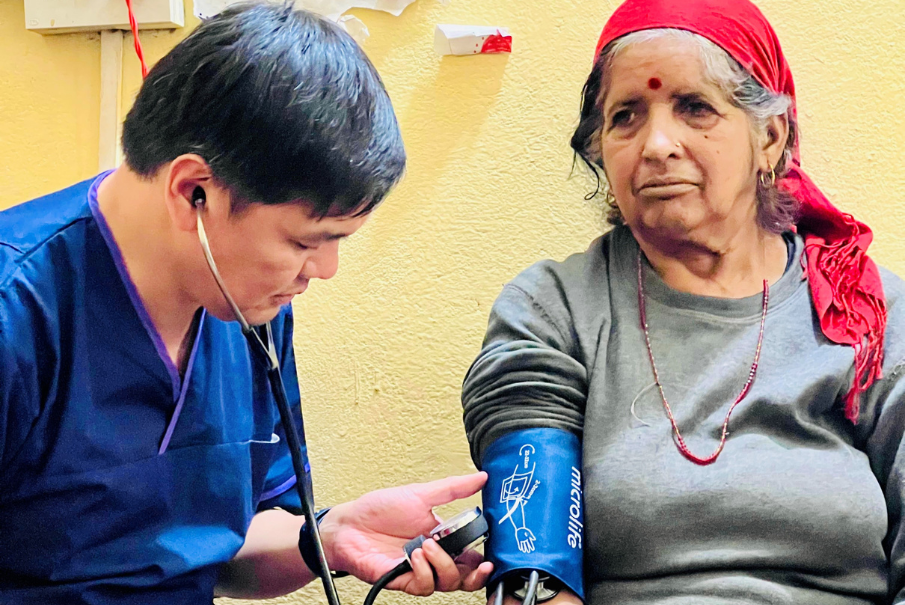
I met healthcare staff working with limited supplies, minimal equipment and inconsistent infrastructure, yet delivering care with ingenuity and unwavering commitment. I listened to stories of families pooling resources to ensure a relative could travel for treatment. I observed consultations where cultural beliefs, economic realities and clinical decision-making were delicately balanced.
Health inequality here is intersectional. It is shaped by poverty, gender, education, geography and tradition. Women may delay seeking care due to household responsibilities. Rural communities may rely on traditional or Ayurvedic medicine alongside formal healthcare, not purely out of preference but because of accessibility and trust.
What this experience has reinforced for me is that inequality is rarely about one single barrier. It is layered. And unless we understand those layers, we risk designing solutions that only address the surface.
As someone who co-leads an EDI working group within my organisation, I came to Nepal wanting to deepen my understanding of how context shapes outcomes. What I have learned is that compassionate leadership begins with humility. It requires us to listen before we lead.
In Pari Gaon, I have had to slow down. To ask questions without assumption. To recognise that what may look like “non-engagement” from a distance may in fact be the result of structural barriers. To appreciate that communities are not passive recipients of care — they are active agents navigating complex systems with remarkable resilience.
This community immersion has been deeply grounding. It has reminded me that health equity is not achieved through policy statements alone, but through relationships, trust and culturally aware practice. It has also challenged me to reflect on inequalities closer to home. While the terrain may differ in the UK, barriers still exist — for marginalised communities, for those living in poverty, for those who feel unheard within the system.
World Health Day is a call to action. But it is also a call to reflection.
My time in Nepal has strengthened my belief that effective leadership in healthcare must centre equity not as an afterthought, but as a guiding principle. We must design services that account for real lives, real journeys and real barriers. We must value local knowledge and lived experience. And we must lead with compassion — because behind every statistic is a person walking a long road to seek care.
I am profoundly grateful to the Florence Nightingale Foundation for enabling this learning. This scholarship has not only broadened my professional perspective; it has deepened my humanity.
Health for all is an aspiration we share globally. Standing in a rural community in Nepal, watching patients arrive after hours of walking, that aspiration feels both urgent and personal.
And for me, the work continues — at home and abroad — with renewed clarity and purpose.
Dani works as CRF Lead Nurse at King’s College Hospital NHS Foundation Trust. The Trust is a member organisation of FNF.